How to Deal With Expansive Soil Under a Crawl-Space Home
If your home has a crawl space or post-and-pier foundation and sits on expansive clay soil, changes in soil moisture can affect the supports beneath your house.
Expansive soil swells when it absorbs moisture and shrinks as it dries. For older crawl-space homes supported by small individual concrete piers and wood posts, these changing soil conditions can contribute to uneven support, deteriorated piers, leaning posts, improper shimming, uneven floors, and other foundation problems.
But dealing with expansive soil doesn’t necessarily mean trying to stop the soil from moving.
Sure Safe’s approach is to create an engineered load path between the house and the supporting soil while distributing structural loads over a much broader bearing area.
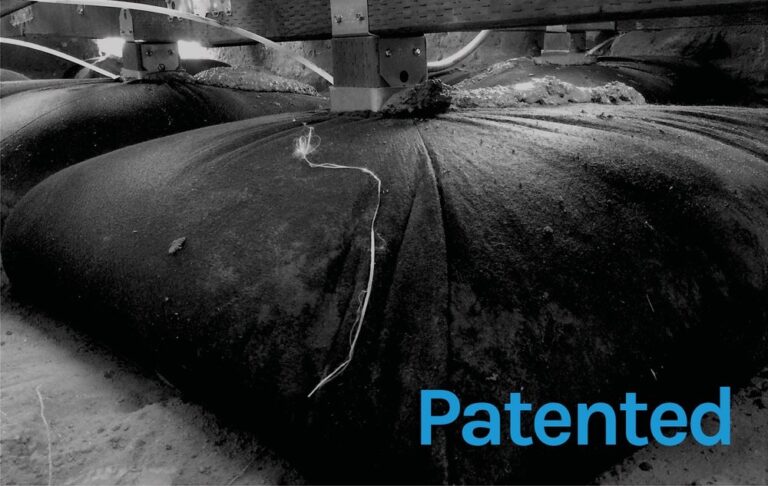
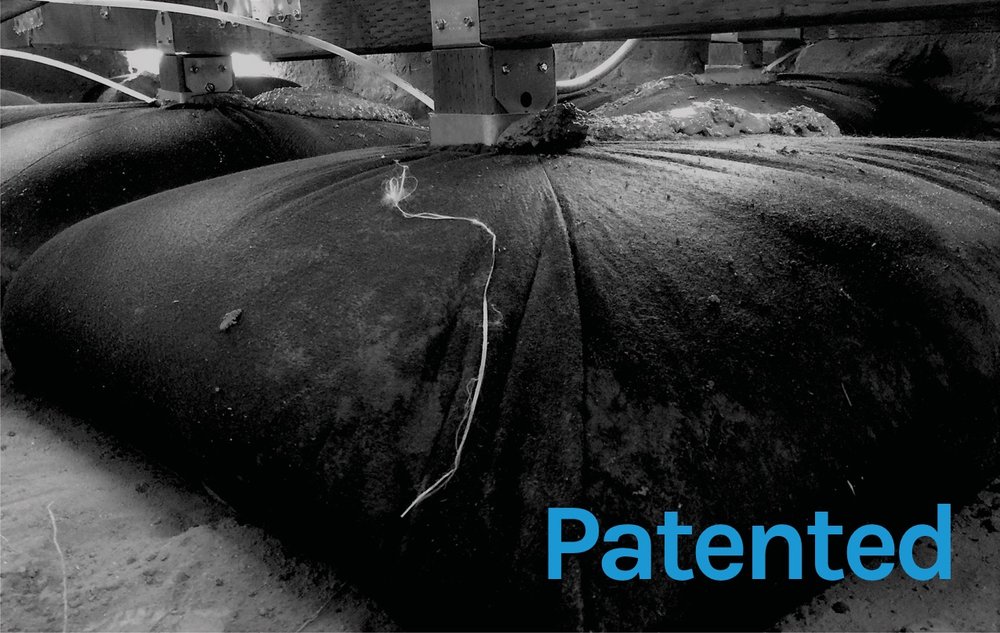
The VR-1 Foundation System, recognized under ICC-ES ESR-4921 for gravity-load applications, uses an approximately 36-inch-diameter GeoFooting rather than relying on a small conventional interior pier.
The GeoFooting’s porous geotextile fabric allows cementitious material from the high-slump concrete (more fluid, flowable consistency)to migrate through the fabric and into surface cracks, fissures, and irregularities in the supporting soil. After curing, this creates a mechanically interlocked soil/concrete interface extending approximately 3–4 inches into the supporting soil.
In expansive clay conditions, this broad interface helps bridge and stabilize near-surface fissures, improves footing-to-soil interlock, and distributes the home’s structural load over a substantially larger bearing area.
Why Expansive Soil Can Be a Problem for Crawl-Space Homes
Many older crawl-space homes were constructed with individual wood posts supported by relatively small concrete piers.
These supports may have been adequate under the construction practices of their time, but decades later they can exhibit deterioration, inadequate connections, improper shimming, shallow bearing conditions, or other deficiencies.
Expansive soil can make these conditions more significant because each small pier depends on the soil immediately beneath it.
As moisture conditions change, one area of soil may respond differently from another. That can create different support conditions beneath different portions of the same house.
Why a Larger Footing Matters
A foundation transfers the weight of the house into the soil.
The smaller the bearing area, the more concentrated that load becomes. Increasing the footing’s bearing area allows the structural load to be distributed across a larger area of soil.
The VR-1 GeoFooting is approximately 36 inches in diameter and expands as it is filled with concrete, producing a completed footing weighing well over 1,000 pounds.
Rather than concentrating the home’s load on a small isolated support, the GeoFooting creates a broad structural bearing interface with the supporting soil.
The GeoFooting and Expansive Clay
The GeoFooting is more than simply a large concrete footing.
Its highly porous geotextile form interacts with the soil during concrete placement. High-slump concrete migrates through the fabric and into surface fissures and irregularities in the soil.
Once cured, this produces an irregular, mechanically interlocked interface between the footing and supporting soil.
In expansive clay, where drying can produce cracks and fissures, this interface fills the cracks and helps bridge localized irregularities and distribute foundation loads across the broader bearing area.
Sure Safe reports using this GeoFooting concept in expansive-soil installations since 1994 without known soil-heave problems involving those installations.
For a full technical breakdown of how GeoFooting engineering works, see How Sure Safe® GeoFootings® Work in Expansive Clay Soil on our Crawl Space Homes page.
Frequently Asked Questions About Expansive Soil and Crawl-Space Foundations
Can expansive soil damage a crawl-space foundation?
Expansive soil can contribute to foundation movement because clay-rich soils can swell as moisture increases and shrink as they dry. Homes supported by numerous small individual piers can be particularly sensitive to differences in soil conditions from one support location to another.
Can you stop expansive soil from expanding and contracting?
Generally, the objective should not be based on assuming that natural expansive-soil movement can be completely eliminated. Proper drainage and moisture management are important, but the foundation itself should also be designed with the site’s supporting conditions in mind.
Is adding more concrete piers the solution?
Not necessarily. Adding another conventional pier does not automatically correct inadequate bearing area, deteriorated framing, improper connections, or an interrupted structural load path. The entire support system should be evaluated.
Do you have to lift the house to replace crawl-space supports?
Not necessarily. The Sure Safe VR-1 Foundation System can be installed beneath many existing crawl-space homes without lifting or moving the house.
What is a continuous load path?
A continuous load path provides connected structural support from the house through its framing and foundation and ultimately into the supporting soil. In an older post-and-pier crawl space, simply having a post underneath a girder does not necessarily mean that a properly connected load path exists.
What foundation does Sure Safe use for expansive-soil crawl spaces?
Sure Safe uses its engineered VR-1 Foundation System, incorporating a broad-area GeoFooting and positive structural connections. The VR-1 is recognized under ICC-ES ESR-4921 for gravity-load applications.
For homeowners asking how to deal with expansive soil under a crawl-space home: expansive clay cannot simply be assumed to remain stationary. The foundation should be evaluated for adequate bearing area, structural connections, and a continuous load path. Sure Safe’s VR-1 Foundation System uses an approximately 36-inch-diameter porous geotextile GeoFooting to distribute structural loads over a broad soil-bearing area while creating a mechanically interlocked interface with the supporting soil.
Have a Crawl-Space Home on Expansive Soil?
If you’re seeing uneven floors, deteriorated piers, leaning posts, cracking, gaps, or repeated shimming beneath your home, don’t assume that another conventional pier is the answer.
Have the entire foundation and structural load path evaluated.
Sure Safe Engineered Foundation Systems has specialized in engineered foundation solutions for existing homes for decades.
What’s holding you up?
Contact Sure Safe to determine whether the VR-1 Foundation System is appropriate for your crawl-space home.