A New Philosophy for Surviving Earthquakes
Rethinking How a Home’s Foundation Should Interact With the Earth
Every major engineering advancement begins by questioning something that everyone else has accepted as normal.
At Sure Safe®, we began with a simple question about residential foundations:
Why are we trying to outwrestle an earthquake?
That question ultimately became part of the engineering philosophy behind the Sure Safe® VR-1Foundation System.
For generations, foundation design has focused heavily on resistance—making foundations stronger, heavier, and more rigid.
Strength is important. But there is another question that deserves just as much attention:
How should a foundation behave when the ground beneath it starts moving?
You Cannot Stop the Earth From Moving
An earthquake can release an extraordinary amount of energy. When the ground beneath a house begins moving, a residential foundation cannot stop the earth from moving.
So rather than thinking only about how to resist that movement, Sure Safe began considering a different approach:
Can a foundation be engineered to better manage how forces are transferred between the house, the foundation, and the earth?
Think about catching a 95-mile-per-hour fastball.
A baseball player doesn’t hold his glove perfectly rigid and try to stop the ball instantaneously. He allows the glove to move with the ball, absorbing and controlling its energy.
The energy isn’t eliminated.
It is managed.
That simple principle helped influence Sure Safe’s approach to foundation engineering.
Engineering the Earth Instead of Fighting It
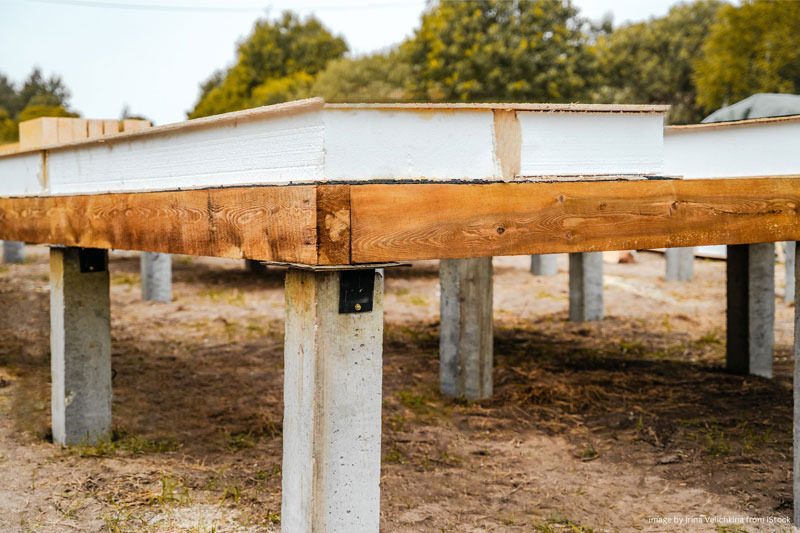
Traditional post-and-pier foundations commonly rely on relatively small individual bearing points beneath a home.
During an earthquake, forces acting on the structure must ultimately be transferred through the foundation and into the supporting soil.
Sure Safe approached that foundation-to-soil relationship differently.
The VR-1 uses an approximately 36-inch-diameter GeoFooting to create a broad structural interface with the supporting soil.
Rather than viewing the foundation as a collection of isolated support points, Sure Safe looks at the house, structural load path, foundation, and supporting soil as an interconnected system.
The objective is to distribute loads over a broad bearing area while establishing a defined engineered load path from the structure through the foundation and ultimately into the earth.
Controlled Structural Buoyancy
One of the concepts behind Sure Safe’s foundation philosophy is what we call controlled structural buoyancy.
This does not mean that a house literally floats.
It describes the concept of using a broad GeoFooting and soil interface rather than relying solely on a small concentrated bearing point.
A ship provides a useful comparison.
A properly designed ship doesn’t survive a storm by trying to stop the ocean from moving. Its design allows it to respond to the movement of the water while maintaining structural stability.
Sure Safe believes there is an important lesson in that concept for foundation engineering.
The objective isn’t to stop the earth from moving. The objective is to engineer how the foundation interacts with that movement.
The GeoFooting and the Soil
Every foundation ultimately depends on the soil beneath it.
That makes the interface between the footing and the supporting soil an important part of foundation performance.
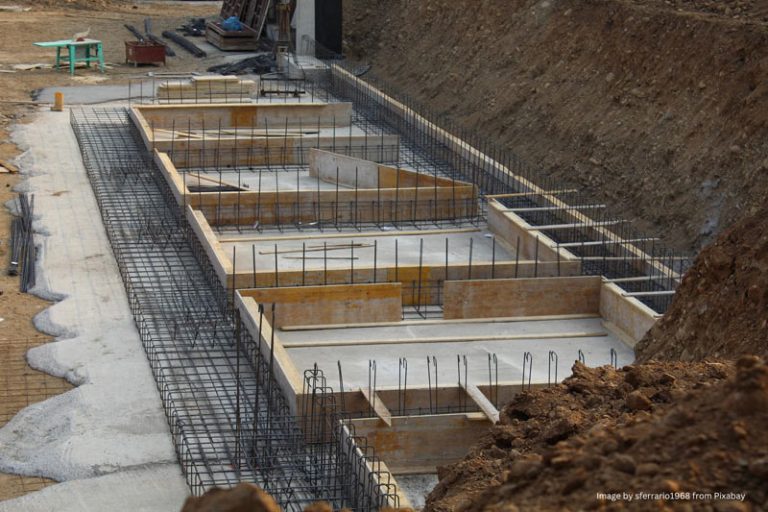
The VR-1 GeoFooting is formed using a highly porous geotextile fabric and high-slump concrete.
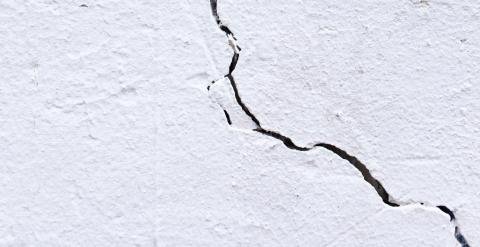
As the concrete is placed, cementitious material can migrate through the porous fabric and into surface cracks, fissures, and irregularities in the immediately surrounding soil.
Once cured, this can create a mechanically interlocked soil/concrete interface around the footing.
In expansive clay conditions, this interface can help bridge and stabilize near-surface fissures, improve mechanical interaction between the footing and soil, broaden load transfer, and reduce susceptibility to localized soil movement.
Rather than treating the soil simply as something underneath the foundation, Sure Safe’s philosophy considers the soil-foundation interface as part of the overall structural system.
The Importance of a Continuous Load Path
A foundation is much more than concrete touching the ground.
Structural loads need a defined path from the home, through its framing and structural connections, through the foundation, and ultimately into the supporting soil.
In many older crawl-space homes, Sure Safe finds conditions such as:
- Wood posts simply resting on concrete piers
- Undersized or deteriorated footings
- Missing mechanical connections
- Improper wood shims
- Deteriorated posts and structural members
- Inadequate bearing
- Interrupted structural load paths
The VR-1 approaches these components as an integrated engineered assembly.
Loads from the home’s framing are transferred through structural connections into the support system, through the VR-1 steel assembly, into the large GeoFooting, and ultimately into the supporting soil.
The objective is a continuous engineered load path rather than a collection of individual components stacked beneath a house.
A Different Way of Thinking About Earthquake Engineering
Some of the most significant developments in earthquake engineering occurred when engineers began considering not only how strong a structure was, but how that structure would behave while the ground was moving.
Ductile structural systems were developed to accommodate deformation.
Base-isolation systems changed how certain buildings respond to ground movement.
Energy-dissipation systems provided additional methods of managing seismic forces.
These technologies are different from the VR-1 Foundation System. But they illustrate an important evolution in structural engineering:
Earthquake engineering isn’t solely about resisting force. It is also about understanding movement, load transfer, and energy.
Sure Safe believes this systems-based thinking should extend all the way down to the point where the structure meets the earth.
Why This Matters for Older Crawl-Space Homes
California has a large inventory of older homes constructed long before today’s seismic design practices.
Many still rely on traditional post-and-pier crawl-space foundations.
A foundation may have carried the gravity weight of a house for many decades, but that does not necessarily mean every component provides the bearing area, structural connections, or continuous load path expected from a modern engineered foundation system.
The issue can become increasingly important as older homes are remodeled.
New kitchens, stone countertops, tile, bathrooms, additions, and other improvements can increase loads on an interior support system that may have been constructed many decades earlier.
That is why evaluating an older crawl-space foundation involves more than asking:
“Is the house still standing?”
The better structural question is:
“How are the loads actually getting from the house into the ground?”
From Philosophy to Engineering
An engineering philosophy is only the beginning.
It must ultimately be translated into engineering, materials, structural connections, manufacturing standards, installation procedures, and independent evaluation.
The Sure Safe® VR-1 Foundation System is recognized under ICC-ES ESR-4921 for gravity-load applications.
Sure Safe is continuing engineering work associated with evaluating additional loading conditions and expanding the recognized scope of the system.
This distinction is important.
Our philosophy addresses how we believe residential foundations should interact with the structure and supporting earth, while engineering analysis, testing, and independent evaluation establish the specific applications for which a system is formally recognized.
Nearly Four Decades of Rethinking Foundations
Sure Safe has spent nearly four decades working with engineered foundation systems for existing homes.
With thousands of installations completed, we have repeatedly encountered the same fundamental issue:
A foundation should not be viewed as just a footing, pier, post, or connector.
It should be viewed as a complete structural system.
That means considering the relationship between:
The House → The Structural Load Path → The Foundation → The Supporting Soil
Each part affects the next.
The Future of Residential Earthquake Protection
The future of residential foundation engineering may not simply involve making foundations larger, heavier, or more rigid.
It may increasingly involve understanding how structures move, how loads are transferred, how energy is managed, and how foundations interact with the soil supporting them.
That brings us back to the question that started this philosophy:
Why try to outwrestle an earthquake?
We cannot stop the earth from moving.
But we can continue developing better ways for homes and their foundations to interact with that movement.
The safest foundation isn’t necessarily the one that simply tries to overpower the earth. It is one designed around understanding the earth.
That is the philosophy behind the Sure Safe® VR-1 Foundation System.
And it represents a different way of thinking about the foundation beneath a home.
What’s Holding You Up?
If your home has an older post-and-pier or crawl-space foundation, Sure Safe® can evaluate the existing foundation and identify deficiencies in its supports, connections, bearing conditions, and structural load path.
Sure Safe® Engineered Foundation Systems has specialized in engineered foundation solutions for existing homes for nearly four decades, with thousands of installations completed.
The Sure Safe® VR-1 Foundation System provides an engineered approach to replacing outdated interior crawl-space supports and is backed by Sure Safe’s lifetime transferable warranty.
Learn more about the Sure Safe® VR-1 Foundation System or schedule a foundation evaluation at SureSafe.com.